
Podcast: Play in new window | Download (Duration: 13:33 — 8.1MB) | Embed
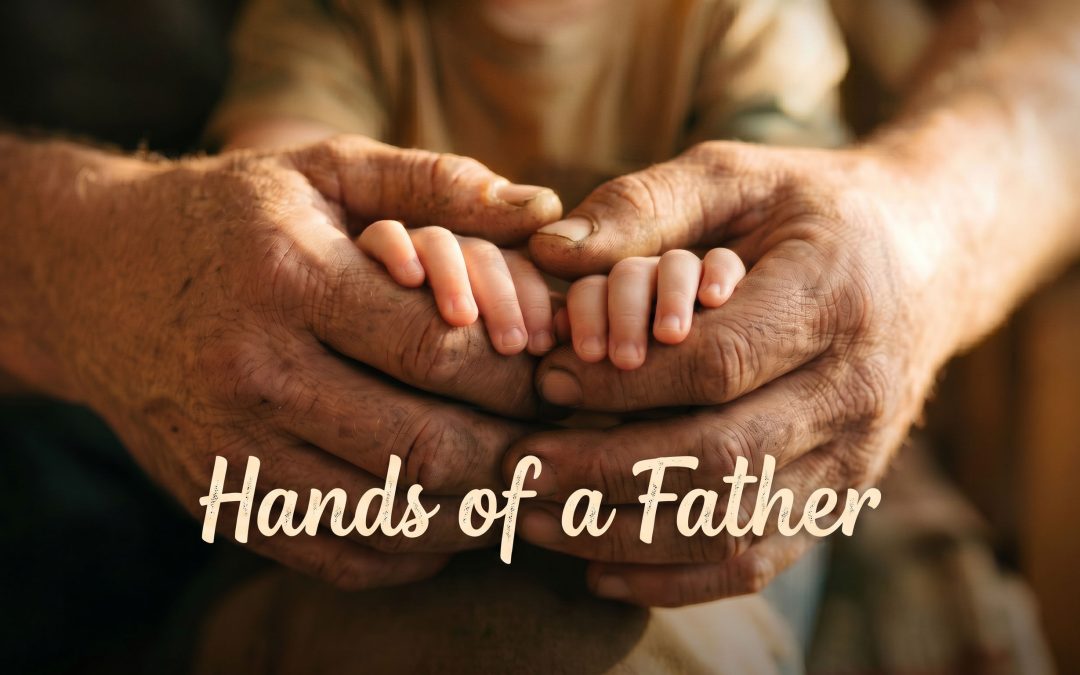
I want to tell you about a pair of hands.
Rough hands. Calloused hands. Hands that smelled like grease and sawdust and whatever was underneath whatever car we were working on that particular day. Hands that could lay a straight line of carpet across a living room floor, split a cord of firewood without breaking a sweat, or coax a stubborn CV joint back into place with nothing but basic tools and a whole lot of patience.
Those were my dad’s hands.
And whether I knew it at the time or not, those hands were shaping me.
Welcome to Stuff I Learned Yesterday, this is episode #701, “Hands of a Father.” I’m Darrell Darnell. In the last month I’ve taught my son how to do a brake job and change an alternator, and I believe that if you aren’t learning, you aren’t living.
Growing up, weekends had a certain rhythm to them. There was always something to do, and “something to do” almost always meant work. Between my dad and stepmom, there was never a shortage of maintenance to catch up on and chores to do. I remember being out in that driveway helping him change tires, swap out spark plugs, pull a battery, change rotors. I helped him swap a starter once in the parking lot where he worked night shifts as a security guard. Helped him wrestle a CV joint into submission. There were other repairs I honestly couldn’t name if you asked me, but I was there, handing him tools, watching, learning.
None of that felt like a lesson at the time. It felt like a normal weekend.
But that’s kind of the point, isn’t it?
It wasn’t just cars, either. My dad was a weekend carpet layer. That was his side job, the thing he did to make ends meet and keep the lights on. He’d take us along sometimes, and we’d help him haul rolls of carpet, cut pad, lay tackstrip, scrape floors. Hard, physical work. The kind of work that makes your back ache and your hands blister.
I also remember cutting firewood, the sound of the chainsaw, the smell of fresh-cut wood, loading it up and hauling it. And baling hay. I know some of you reading this are laughing right now because you know what that is and you remember that pain. If you don’t, just know that stacking hay bales in the summer heat is its own kind of character-building experience.
My dad also built things. He worked with wood. He made things with his hands that lasted. A cedar chest for my stopmom, a gun rack for his hunting arsenal. Even the paddle he used when we got in trouble was something he’d crafted himself. I’m not entirely sure that detail is supposed to be endearing, but here we are.
The point is this: my dad was always doing something, and he almost always brought us along. I hated it at the time, but now I’m grateful he did it.
There was a moment, which I’ve talked about on this show before, where I told my dad that everything he’d taught me over the years was what gave me the confidence to buy a project car and fix it up myself. His posture changed when I said that. He straightened up, looked me in the eye, and said, “That’s all it takes is confidence.”
He’s right. But I’d add something to that. It also takes someone who believed in you enough to put a wrench in your hand before you knew what you were doing with it.
My dad also taught me things that had nothing to do with cars or carpet or firewood. He taught me to respect all people. The janitor and the CEO deserve the same courtesy. He taught me to thank whoever put the food in front of you. He taught me to respect women. He made sure we had enough to eat. He instilled values in me that I still carry.
And he did all of that while working against things most people never had to face.
I shared some of my dad’s story in episode 632. His childhood was genuinely rough. When you understand what he came from, when you understand what he was working against just to show up every single day, the picture changes. My dad didn’t just do okay. He broke a cycle that could have broken him. He chose differently. He showed up. He put in the work. He put the wrench in my hand.
When I looked him in the eye and told him he was a good dad, he shook his head and looked down at the table. I know that look. He was thinking about his mistakes. None of us get through this thing without some entries in that column, some regrets that keep us up at night. But here’s what I know: you can be imperfect and still be remarkable. Those two things can be true at the same time. They have to be. After all, none of us are perfect, and we are all capable of being remarkable.
The Bible has a lot to say about fathers, and it doesn’t mess around about the weight of that role.
Proverbs 22:6 says, “Train up a child in the way he should go; even when he is old he will not depart from it.” That’s not a passive instruction. Training requires presence. It requires repetition. It requires putting your kid next to you and saying, “Watch this. Now you try.”
Ephesians 6:4 says, “Fathers, do not exasperate your children; instead, bring them up in the training and instruction of the Lord.” And Deuteronomy 6 contains a well-known passage about impressing God’s commandments on your children. It says to talk about them when you sit at home, when you walk along the road, when you lie down, and when you get up.
In other words, fatherhood isn’t a once-a-week event. It happens in the in-between moments. It happens on Saturday mornings in the driveway. It happens hauling hay and laying carpet and splitting wood.
Psalm 103:13 says, “As a father has compassion on his children, so the Lord has compassion on those who fear him.” Fatherhood, when it’s done well, is supposed to be a picture of something much bigger than itself.
And as we approach Father’s Day in a couple of weeks, these are some things I’ve been thinking about lately.
I was talking with a guy at church recently. His son had broken his arm, and naturally, mom’s instinct kicked in full force. She wanted to help him with everything — tying his shoes, helping him with the things he was struggling to manage. Her desires were coming from a place of pure motherly love. Completely understandable.
But the dad paused on it. He felt like his son was capable of adapting. Of figuring it out. Of pushing through the struggle and learning something about himself in the process.
They talked about it, the two of them as parents, and the dad made the case that his son was at an age where he was starting that transition toward manhood. And in that moment, the most important thing wasn’t someone doing things for him. It was someone believing he could do it himself. The father’s role in that season, teaching the boy to be a man, to push through difficulty, was different from the nurturing role his mom was naturally stepping into.
And to be clear, both instincts were good and both have their place. Both came from love. But they needed to work together, complement each other, and in that specific moment, mom needed to step back just a little so dad could step forward.
It turned out the dad was right. The boy figured it out. He adapted. He was stronger for it. He learned lessons that will pay off again and again later in his life.
That story stuck with me because it’s a picture of what fatherhood actually is. It’s not just providing. It’s not just protecting. It’s about knowing when to let your kid struggle so they can grow.
Here’s what I’ve learned.
We live in a world that desperately needs more fathers. Better fathers. Fathers who are willing to step into their role and stay there.
According to the U.S. Census Bureau, approximately 18.4 million children in America live without a father in the home. Nearly 1 in 4 kids. The research on what that absence does to academic performance, to emotional health, to the likelihood of poverty, to the likelihood of incarceration is staggering. The world doesn’t just need more dads biologically. It needs men willing to show up, stay present, and do the work.
And I want to say something to the dads of young kids, because I remember this feeling: when your children are very young, it can feel like there’s less for you to do. Like mom has it covered. Like you’re not quite sure where you fit in. Like the bond isn’t there yet.
Don’t believe that lie.
Those moments matter. Those early years of presence, of being in the room, of being the one who reads the book or changes the diaper or just sits on the floor next to them, that is fatherhood. The connection you build then is the foundation that makes it possible to hand them a wrench someday, or to have the conversation about what it means to grow into a man.
And if you have a daughter, I need you to hear this too. She needs you just as much. Maybe differently, but just as much.
Your daughter is watching you. She’s watching how you treat her mother. She’s watching whether you show up. She’s watching whether your word means something, whether your presence is a comfort or an absence. What she sees in you will quietly become her benchmark, her picture of what a man is supposed to look like. Researchers and family counselors have said it for decades: a daughter’s relationship with her father is one of the most powerful predictors of how she’ll relate to men for the rest of her life. That’s a sobering thought. It’s also an incredible opportunity.
She doesn’t need you to hand her a wrench, although, for the record, there’s nothing wrong with that and I think every girl needs to be taught how to do basic car repairs when they start driving. But what she needs is to see you lead with integrity. She needs to see you love her mom well. She needs one-on-one time with you, distraction-free moments where she feels like the most important person in the room. She needs to know that you see her, that you’re for her, and that she can trust you with the hard stuff when those teenage years roll around and everything feels like it’s falling apart.
I’ve talked on this show before about how important it is to establish those patterns of conversation and trust early, before the pressure hits. With daughters, that’s just as true as it is with sons.
I made sure my daughter knew where to aim if she ever needed to defend herself. I made sure she knew the right way a man ought to treat a woman, because she’d seen it in her home. That’s not a small thing. That’s the whole thing.
Your son needs you to show him how to become a man. Your daughter needs you to show her what a good man looks like. Both of those are your job, dad. And both of them are worth everything you’ve got.
And it’s important for us to realize that we can learn not just from the things our fathers did right, but from the places they fell short. We can choose to do better. Generation by generation, we can get a little further down the road. My dad was better than his dad and I’m trying to be better than mine. Not because he wasn’t good, he was, but because that’s how it’s supposed to work. That’s the gift we give our kids. Progress. Growth. A little more of what they need.
If you’re a father, biological, adoptive, stepfather, mentor figure, whatever, the world is counting on you in ways you may not fully realize. Put the wrench in their hand. Bring them along to the hard work. Let them struggle sometimes. Show up on the ordinary Saturdays that they’ll carry with them for the rest of their lives.
Those moments have a way of adding up. And one day, if you do the work, your kids will look down at their own hands and see yours.
I’m Darrell Darnell, and this has been Stuff I Learned Yesterday.
I want you to be a part of the next Monday Mailbag coming up in three weeks on June 29th! The submission deadline is the end of day on Wednesday June 24th. Monday Mailbag is your opportunity to Share what YOU’VE learned, so that other listeners and I can learn from YOU. It can be a message as short as 30 seconds or several minutes long. It really doesn’t matter just as long as it’s something that will benefit others. You can send in questions or responses to my SILY episodes, and I’ll respond to them via Monday Mailbag episodes. You can participate in Monday Mailbags by visiting the Golden Spiral Media listener feedback page.