
Podcast: Play in new window | Download (Duration: 15:20 — 9.2MB) | Embed
I’ve made it no secret on this podcast that I am a super fan of the TV show LOST. I love the mysteries, and the beautiful setting. I love the way the character stories interweave, I love the lore and history of the island. Most of all I love the characters. The show was beautifully filmed, masterfully directed, and expertly written. And to top it all off, the cast was top notch, delivering performances that were nuanced, strong, vulnerable, and compelling. There are a lot of poignant moments and pieces of dialog that still echo in my mind today. But perhaps the most tragic line ever spoken in the series was, “Something tells me he never got around to making that call.”
Welcome to Stuff I Learned Yesterday. This is episode 693, “Make the Call.” I’m Darrell Darnell, I have a screen-used piece of a tarp from LOST framed and hanging in my studio, and I believe that if you aren’t learning, you aren’t living.
LOST premiered on September 22, 2004, which means you’ve had more than 20 years to watch the show. I talk about it on this podcast A LOT! So if you haven’t seen the show after all this time and after all of my gushing about it, I feel no sympathy for spoiling you on one of season one’s best moments today. It’s currently on Hulu or Disney Plus if you have the Hulu bundle, so go check it out.
For those who haven’t seen it, or haven’t seen it in a while, let me give you some context.
The show centers around the survivors of a plane crash. Oceanic flight 815 was scheduled to fly from Sydney, Australia to Los Angeles, California. Mid-flight, somewhere over the South Pacific, the plane began to shake and break apart into three pieces. All three pieces landed on a mysterious, uncharted island.
The tail section landed in the water on the northeast side of the island. The cockpit landed in the middle of the island. The fuselage landed on the beach on the southern side. Forty-nine people survived the initial crash in the fuselage section, and the first season focuses on about fifteen of those survivors: Jack, Kate, Sawyer, Jin, Sun, Hurley, Locke, Rose, Walt, Michael, Boone, Shannon, Sayid, Charlie, and Claire. Our story today is about Jack and Sawyer.
Before the crash, Jack was a doctor. A surgeon. Highly skilled, highly sought after. He was the guy you called when the case was supposed to be impossible. Once you get to know him, that tracks completely. Jack is obsessed with fixing things. The problem is, that gift didn’t extend to the relationships in his own life. Jack could fix a stranger on an operating table and completely destroy the people closest to him without even realizing he was doing it.
Being a doctor was the family business. Jack’s father, Christian, was also a highly skilled and deeply respected surgeon. He was the chief of surgery at the same hospital where he and Jack both worked. Their relationship was complicated. Professional on the surface, but quietly painful underneath. In Jack’s eyes, he was never quite good enough for his father. Christian always found a way to correct him, criticize him, redirect him. The words Jack needed to hear most, “I’m proud of you. You did a good job,” never came.
Then one day, everything came to a head.
Christian was called in for an emergency surgery during lunch. Somewhere along the way, Jack got pulled in too. And it didn’t take Jack long to see what was wrong. Christian’s hands were shaking. He’d been drinking at lunch, and he’d had too much. He was drunk, impaired, and a patient’s life was on the line.
The patient, and her unborn baby both died. Jack’s moral compass, the same one that made him a great doctor and a natural leader, wouldn’t let him hide what happened. He reported his own father to the medical board. Christian lost his license. Lost his prestigious position. Lost everything he’d built his identity around.
Christian needed to get away. He ended up in Australia, and what followed was a dark, destructive spiral of constant drinking. He died in Sydney of an alcohol-induced heart attack. Jack had flown to Australia to retrieve his father’s body and bring him home. The whole flight back, Jack carried something heavier than grief. He carried guilt. The relentless, suffocating kind that keeps asking the same question over and over: Did I go too far? Did I cause this?
Sawyer came to the island carrying his own weight.
When he was eight years old, he witnessed the death of both his parents. That kind of wound doesn’t just heal on its own. It festers. And for Sawyer, it had been festering for almost thirty years. His life’s ambition had become ONE thing: find the man responsible for making him an orphan and make him pay.
If Jack led with emotion and instinct, Sawyer was the opposite. Before the crash, he was a con man, and a very good one. He ran long cons, the kind that required patience, strategy, and multiple moves planned out in advance. He also possessed a gift for reading people.
He had a southern drawl he’d picked up growing up in Alabama, and paired with his easy smile and natural charm, it made people surprisingly easy to manipulate. He held information like currency, rarely gave anything away without expecting something in return, and clashed constantly with Jack. In short, the two men didn’t think much of each other.
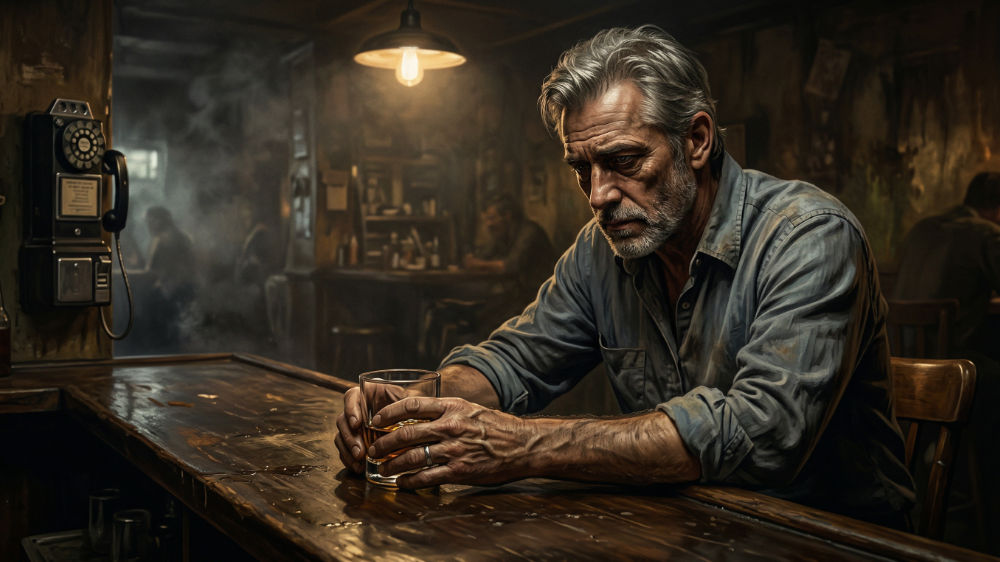
Sawyer had been in Sydney chasing down a lead he believed would finally bring him face to face with the man he’d been hunting his whole life. He visited a bar. He needed something to help him work up the nerve to do what he’d come to do. And while he was there, he got to talking to a fellow American. A man named Christian.
The lead didn’t pan out. Sawyer got himself in trouble with the law and was put on a plane back to the States. That plane was Oceanic flight 815.
By the time we reach the end of season one, the survivors have been on the island for weeks. A group of them have built a raft and are preparing to launch in hopes of finding rescue. Others are heading into the jungle to retrieve some old dynamite they’ve discovered, hoping it will help them solve a growing mystery. Sawyer will be on the raft. Jack is going for the dynamite.
Sawyer is out cutting bamboo that will be used for the raft’s mast when Jack tracks him down to hand him a gun. And what starts as a quick, practical exchange turns into one of the most quietly powerful moments in the entire series.
Jack hands over the gun. Sawyer pushes back, wondering what he’d even need it for. Jack just says, just in case. They talk briefly about who else is getting weapons, about the plans ahead. Then Sawyer says it plainly: By the time you get back, we’ll be in the water. Guess this is pretty much goodbye.
Jack offers a simple good luck and turns to walk away.
And that’s when Sawyer calls after him.
“Jack.”
He tells Jack about a man he met in a bar in Sydney. An American. A doctor. A man who was drinking like he was trying to set some kind of record. He tells Jack this man had a son, also a doctor. That the two of them had a massive falling out. That the man knew it was his own fault, even while his son was back in the States carrying the same guilt, thinking it was his.
Jack’s posture changes. His gaze sharpens. He’s no longer half-listening. Every word has his complete attention now.
Sawyer keeps going. See, kids are like dogs. You knock them around enough, they’ll think they did something to deserve it. Then he says that this man, Christian, told him he wished he had the courage to pick up the pay phone in that bar. Call his kid. Tell him he was sorry. Tell him he was a better doctor than he’d ever be.
He’s proud. And he loves him.
Jack looks away. His eyes fill with tears. He fights them back, looks down at the jungle floor, trying to hold himself together under the weight of what he’s just heard.
Sawyer gives him a moment. Then quietly says, Something tells me he never got around to making that call. Small world, huh?
Jack can barely get the word out. Yeah.
Good luck, Jack.
Here’s what I learned.
Sawyer had nothing to gain from that conversation. Nothing. He wasn’t running a con. He wasn’t positioning himself for leverage. There was no angle. For a man who spent his entire adult life building walls and using information as a weapon, that moment was something else entirely. He let his humanity win. He set down the armor, leaned into the uncomfortable, and did something quietly generous for a man he didn’t even particularly like.
And what happened because of it? Words spoken from a barstool in Sydney, words that never made it into a phone call, words that died with a broken man far from home — somehow found their way to the son who needed them most. Standing in a jungle. On an island in the middle of nowhere.
Those words brought more healing than any medicine Jack could ever prescribe. More peace. More restoration. Not because they erased the pain or answered every lingering question, but because Jack finally knew. His father saw him. His father was proud of him. His father loved him.
Words left unsaid have a cost. We just don’t always see the invoice until it’s too late.
A few weeks ago, my dad stopped by to visit me on my 50th birthday. I was home alone, eating lunch. Halfway through a ham sandwich when he showed up.
He sat down at the table and we talked for close to an hour. Neither one of us is exactly a brilliant conversationalist, so there were stretches of silence sprinkled in. That’s just us. Always has been.
At some point I brought up a recent conversation I’d had with my mom, the one I talked about in episode 688. My dad couldn’t believe it. Couldn’t understand it. We both sat with that for a minute, just kind of quietly processing it.
Then I decided to say something I wanted him to hear.
I told him I was glad he raised us. That I was grateful to have him as my dad. That he was a good dad.
He shook his head and looked down at the table.
I know that look. He was thinking about his mistakes. The regrets. The long list of things he’d go back and do differently if he could.
So I said it again. You were a good dad.
He didn’t respond. Just kept looking down.
Here’s the thing. My dad and I could both sit down and write out a list of things we wish had gone differently. That list exists. I’m not pretending it doesn’t. But you know what? I could write that same list about every significant relationship in my life. I could fill several pages with my own regrets as a father. None of us get through this thing without some entries in that column.
But my dad had a horrific childhood. I shared some of that story back in episode 632. When you understand what he came from, when you understand what he was working against just to show up every day, my dad wasn’t just a good dad, he was a remarkable one. He broke a cycle that could have broken him. He chose differently. That matters. That counts for something.
He may not believe it when I say it. He might never believe it. But he needs to hear it. Not for my sake, for his. And honestly, a little bit for mine too. Because I refuse to be Jack standing in that jungle, carrying grief and guilt and wondering what my father really thought of me, wishing someone could deliver me a message from a bar in Sydney.
I don’t want to live with the weight of words I never said.
So I’ll keep saying it. Every chance I get, for as long as I have the chance to say it. You were a good dad, Dad. I’m not going to stop. I don’t know if it will ever fully land, if it will ever quiet the voice in his head that argues back. But I know this. He will never have to wonder how I feel about him.
Is there someone in your life who needs to hear something from you? A parent, a child, a friend, a sibling? Someone who’s been carrying around a weight that the right words from you could lighten, even just a little?
Don’t wait for the perfect moment. Don’t wait until you’re ready. Don’t let those words die on a barstool in Sydney.
Pick up the phone. Sit down at the table. Say the thing.
Say it today.
I’m Darrell Darnell, and this has been Stuff I Learned Yesterday.
I want you to be a part of the next Monday Mailbag on June 29th! Monday Mailbag is your opportunity to Share what YOU’VE learned, so that other listeners and I can learn from YOU. It can be a message as short as 30 seconds or several minutes long. It really doesn’t matter just as long as it’s something that will benefit others. You can send in questions or responses to my SILY episodes, and I’ll respond to them via Monday Mailbag episodes. You can participate in Monday Mailbags by visiting the Golden Spiral Media listener feedback page.