
Podcast: Play in new window | Download (Duration: 15:46 — 9.4MB) | Embed
As the first season of LOST came to an end, two of the lead characters, Jack and Locke, found themselves pursuing the same task but for completely different reasons. They both felt led to open a mysterious hatch; Jack for survival, Locke to fulfill his destiny.
On their way to the hatch with bags full of dynamite, the men found themselves in a tense conversation.
LOCKE: I think that’s why you and I don’t see eye-to-eye sometimes, Jack — because you’re a man of science.
JACK: Yeah, and what does that make you?
LOCKE: Me, well, I’m a man of faith. Do you really think all this is an accident — that we, a group of strangers survived, many of us with just superficial injuries? Do you think we crashed on this place by coincidence — especially, this place? We were brought here for a purpose, for a reason, all of us. Each one of us was brought here for a reason.
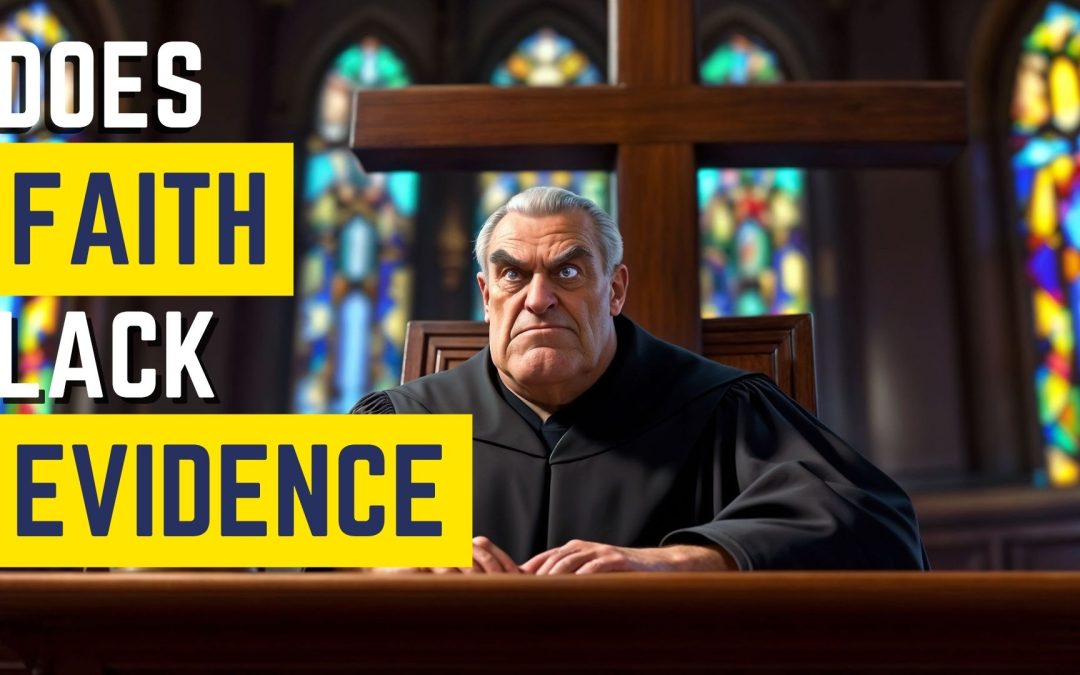
Welcome to Stuff I Learned Yesterday. I’m Darrell Darnell and this is episode 674, “Faith on Trial.” The season 2 premiere of LOST is called, “Man of Science, Man of Faith.” It was watched by over 23 million people making it the most watched episode of the entire series, and I believe that if you aren’t learning, you aren’t living.
These next three months are going to be based on the verse 1 Corinthians 13:13 which says, “And now these three remain: faith, hope and love. But the greatest of these is love.” In February we’ll examine love, next month we’ll take a look at hope, and today, we put faith under the microscope.
There’s a great scene from “Indiana Jones and the Last Crusade” that powerfully illustrates faith. You probably remember it. Indy stands at the edge of a chasm, his dying father behind him, the Holy Grail somewhere ahead. Indy needs to cross the chasm and find the grail in order to save the life of his father. The ancient knight’s riddle echoes in his mind: “Only in the leap from the lion’s head will he prove his worth.”
What does Indy do? He doesn’t just close his eyes and jump blindly into the abyss. He examines the evidence. He studies the riddle and examines his father’s journal research. He considers what he’s learned about the tests so far. Then, based on that evidence, he takes what appears to be a leap of faith. But here’s the thing – it wasn’t blind faith at all. It was reasoned trust based on available evidence.
Faith has many facets. It’s a complex word that can function as both a noun and a verb. As a noun, we might say, “My faith in God is the most important thing to me” or “I am a follower of the Christian faith.” But when we live and act out what we believe, when we put our convictions into motion, faith becomes a verb. When we actively trust in God’s promises or obey His commands, faith transforms from belief into action.
For many people today, they find themselves in a similar situation to Jack and Locke caught between two extremes. On one side are those who believe that faith requires the complete suspension of reason, logic, evidence, and science. On the other side are those who insist that any belief not provable in a laboratory is intellectual suicide. Both extremes miss the mark entirely.
Does faith stand in opposition to science, logic, evidence, and rational thought? Is faith nothing more than trusting in things blindly and without rational reason? Absolutely not! Science, logic, evidence, and rational thought are gifts from God – tools that can actually enrich and strengthen our faith rather than undermine it.
So if faith is not trusting in things blindly and without rational reason, what is it?
The Biblical model of true faith involves examining evidence, not avoiding it. Christianity is not an abandonment of reason and sense perception. In fact, consider what the apostle John wrote in his first letter: “We proclaim to you the one who existed from the beginning, whom we have heard and seen. We saw him with our own eyes and touched him with our own hands. He is the Word of life.”
John is appealing directly to our senses – sight, hearing, and touch. He’s pointing to physical evidence to back up his claims about Jesus. This isn’t the language of blind faith; it’s the language of witnessed truth.
Peter takes a similar approach in his second letter: “For we did not follow cleverly devised stories when we told you about the coming of our Lord Jesus Christ in power, but we were eyewitnesses of his majesty.” Here Peter argues his case like a skilled attorney, appealing to eyewitness testimony – the kind of evidence that holds up in courtrooms around the world.
The gospel of John concludes with this remarkable statement: “Jesus performed many other signs in the presence of his disciples, which are not recorded in this book. But these are written that you may believe that Jesus is the Messiah, the Son of God, and that by believing you may have life in his name.”
Think about what John is saying here. He’s telling us that he carefully selected and recorded specific evidence that he witnessed firsthand, with the explicit purpose of helping readers examine that evidence and develop faith based on what they discovered. This is evidence-based faith, not blind faith.
Now, you might look at the evidence John presents and find it insufficient for your own belief. That’s your prerogative. But that doesn’t change the fundamental fact that Christian faith is designed to be evidence-based. As Tim Barnett puts it, “Faith isn’t believing in spite of the evidence, but rather believing in light of the evidence.”
Some of you familiar with Scripture might be raising an objection right about now. What about verses like Hebrews 11:1, which says, “Now faith is confidence in what we hope for and assurance about what we do not see.” Or 2 Corinthians 5:7, which tells us “For we live by faith, not by sight.” Don’t these passages suggest that faith operates contrary to or independent of what we can observe?
Here’s where we need to be careful not to create false dichotomies. When the Bible talks about not living by sight, it’s not encouraging us to ignore evidence or shut off our reasoning abilities. Instead, it’s teaching us that faith doesn’t put ultimate trust in temporary, changeable circumstances. Faith doesn’t find its foundation in bank account balances, internet headlines, or medical reports – not because these things aren’t real, but because they’re not ultimate.
We don’t ignore the troubles we can see; instead, we understand them within the larger context of eternal realities that can’t be measured in a laboratory but are nonetheless real. The things we see now will eventually pass away, but the things we cannot see with physical eyes will last forever.
Dallas Willard captured this beautifully when he wrote, “Faith is not belief without proof but trust without reservation.” This is where our faith as a concept becomes faith as action. When our faith is alive and active, it demands something from us. It moves us beyond mere intellectual assent into the realm of lived trust.
Here’s what I learned.
The phrase “the righteous shall live by faith,” which appears multiple times in Scripture, starting with the prophet Habakkuk and echoed by Paul, doesn’t mean we abandon reason. Instead, it means we understand that our relationship with God isn’t earned through our own good works or human effort. We’re made right with God through faith in Christ’s righteousness, not our own merit.
This principle finds its ultimate foundation in historical, empirical events. Consider Paul’s stark declaration in 1 Corinthians 15: “And if Christ has not been raised, our preaching is useless and so is your faith.” Paul is making Christian faith dependent on a historical, verifiable event. He’s essentially saying, “If you can prove the resurrection didn’t happen, then everything we believe falls apart.”
That’s either the statement of a madman or someone completely confident in the historical reliability of the resurrection. Paul wasn’t asking people to believe despite the evidence; he was challenging them to examine the evidence carefully.
We see this principle illustrated beautifully in Jesus’ encounter with a Roman centurion. The soldier approached Jesus about his seriously ill servant. When Jesus offered to come and heal the servant personally, the centurion replied that he knew Jesus could simply speak the word and the healing would occur. Jesus was amazed and declared that he had not seen such great faith anywhere in Israel.
But was this centurion’s faith blind? Not at all. It was based on evidence. He had likely heard numerous reliable and verifiable accounts of Jesus’ healings and miracles. As a military leader, he understood authority and how commands work. Based on his personal experience with authority and the credible testimonies about Jesus he had encountered, his faith was established on solid ground.
You might say, “That’s fine for people who lived during Jesus’ time, but what about us? We don’t have the luxury of firsthand witnesses.” But here’s the thing – we actually have more evidence available to us than any generation in history. Archaeological discoveries continue to confirm biblical accounts. Historical research has validated numerous details about first-century Palestine that were once questioned. The manuscript evidence for the New Testament far exceeds that of any other ancient document.
Yet here’s where the rubber meets the road, and where both believers and skeptics need to face some uncomfortable truths.
For the skeptic: intellectual honesty demands that you examine the evidence fairly, not just dismiss it because you don’t like the implications. If you claim to value reason and evidence, then you need to actually look at the historical case for Christianity rather than simply assuming it’s been debunked. Many of history’s greatest thinkers, scientists, and scholars have examined this evidence and found it compelling. Are you willing to investigate with the same rigor you’d apply to any other historical claim?
For the believer: faith built on evidence doesn’t mean faith without mystery or challenge. Living by faith means trusting God’s character and promises even when circumstances seem to contradict them. It means acting on what you believe to be true even when you can’t see the outcome. Real faith requires both intellectual honesty about the evidence and spiritual courage to live according to that evidence.
Both skeptic and believer must wrestle with this question: What if the evidence actually points toward the truth of Christianity? What if Jesus really did rise from the dead? What if the historical case is stronger than you’ve assumed? What would that mean for how you live your life?
The call isn’t to blind faith or intellectual suicide. The call is to honest investigation followed by the courage to live according to what the evidence reveals. Faith, at its core, is not the absence of doubt but the presence of trust based on sufficient reason.
Here’s my challenge to you: Don’t settle for secondhand opinions about Christianity, whether those opinions come from skeptics who’ve never seriously examined the evidence or from believers who’ve never honestly faced the hard questions. Do the work yourself. Read the primary sources. Examine the historical evidence. Consider the philosophical arguments. Talk to people who disagree with you.
And then – here’s the crucial part – be willing to live according to whatever conclusion the evidence leads you to. Because in the end, faith isn’t just about what you believe in your mind; it’s about how that belief transforms the way you live, love, and hope in a world that desperately needs all three.
The most honest thing any of us can do is to acknowledge that both faith and doubt require us to take a step beyond absolute certainty – but only one of them offers a foundation solid enough to build a life upon.
I’m Darrell Darnell, and this has been Stuff I Learned Yesterday.
I want you to be a part of the next Monday Mailbag coming up later this month on December 29th! The submission deadline is Tuesday, December 23rd. Monday Mailbag is your opportunity to Share what YOU’VE learned, so that other listeners and I can learn from YOU. It can be a message as short as 30 seconds or several minutes long. It really doesn’t matter just as long as it’s something that will benefit others. You can send in questions or responses to my SILY episodes, and I’ll respond to them via Monday Mailbag episodes. You can participate in Monday Mailbags by visiting the Golden Spiral Media listener feedback page.